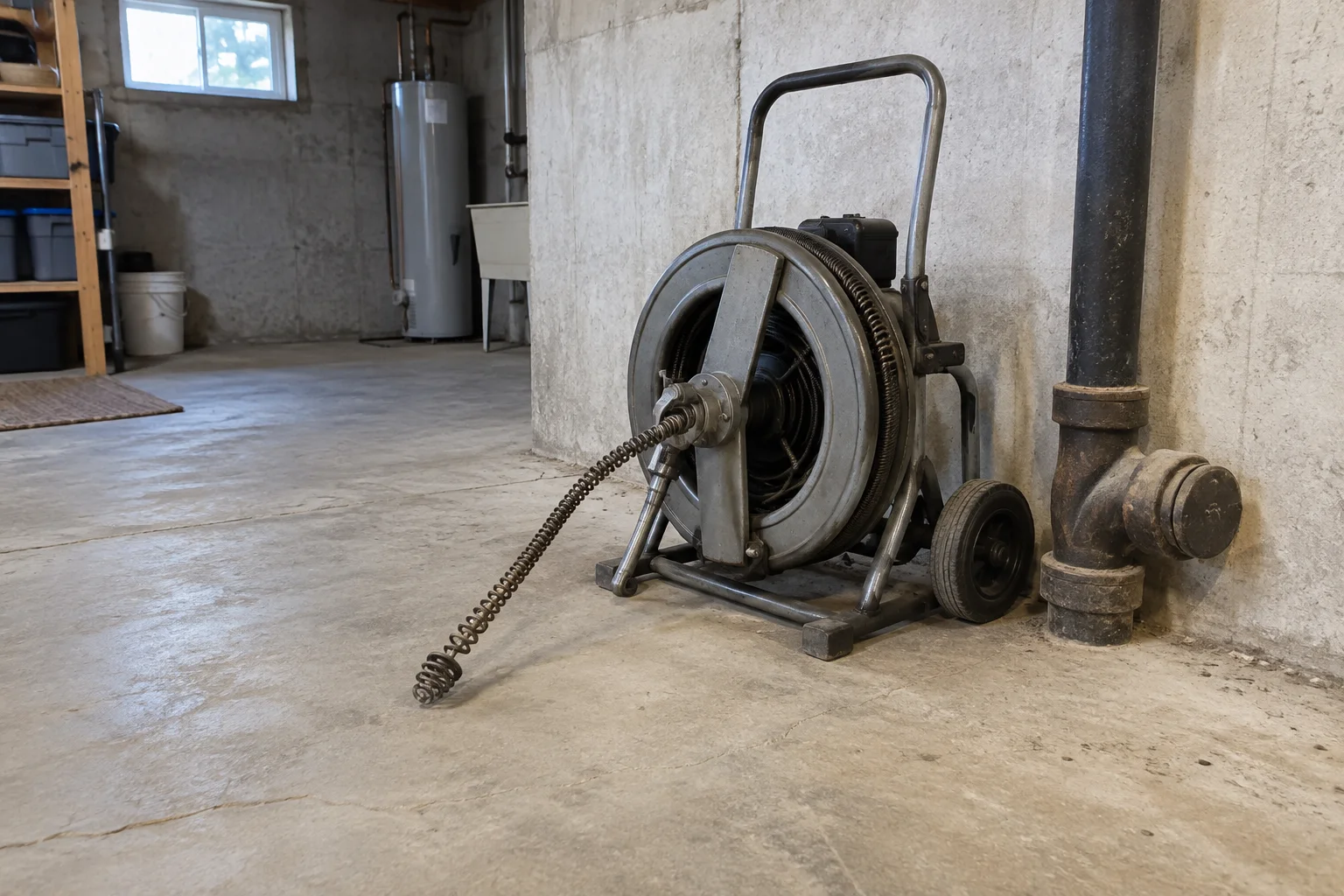
MECHANICAL SEWER CLEANING
What sewer rodding can do.
And what to ask next.
Sewer rodding uses a mechanical cable and selected attachments to work through a reachable obstruction. The contractor chooses an access point and equipment suited to the line. The aim is to restore a drainage path and explain what was encountered along the way.
Several slow fixtures, a shower that rises after a flush, or a floor drain backing up during laundry can suggest a shared-line restriction. Those symptoms do not identify its exact location. If wastewater is coming up now, start with emergency sewer help. If only one fixture is slow, a drain-cleaning assessment may be the better starting point.
An open line is not the same as a repaired pipe. Rodding does not reconnect a displaced joint, close a root entry point, or repair a collapsed section. For a recurring problem, ask what a camera inspection could establish after enough access and visibility are available.
Hydro jetting may be appropriate for suitable buildup when the pipe and access support that approach. Ask why the method fits your line. A bigger machine or higher price does not replace a clear explanation.
Before you approve the work, ask:
- Which line is included, and where will you access it?
- What are the service-call and after-hours charges?
- Does the quote include an inspection or recording?
- What happens if the first clearing does not restore flow?
Agree on the scope and applicable charges before the contractor begins. Ask for authorization before additional equipment, another access point, or repair work is added. Afterward, keep the findings and invoice together so a future visit has a useful starting point.